


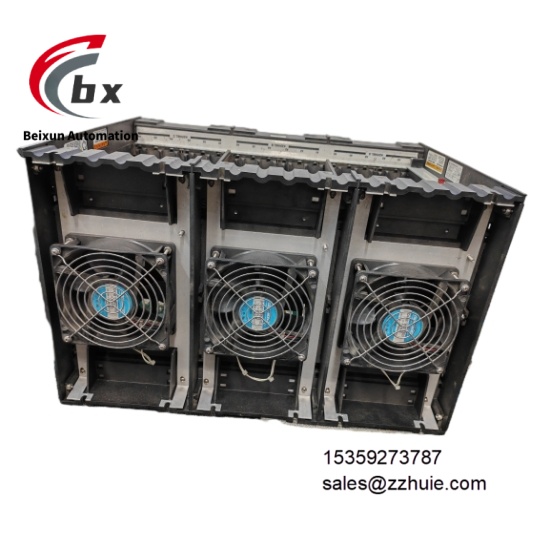

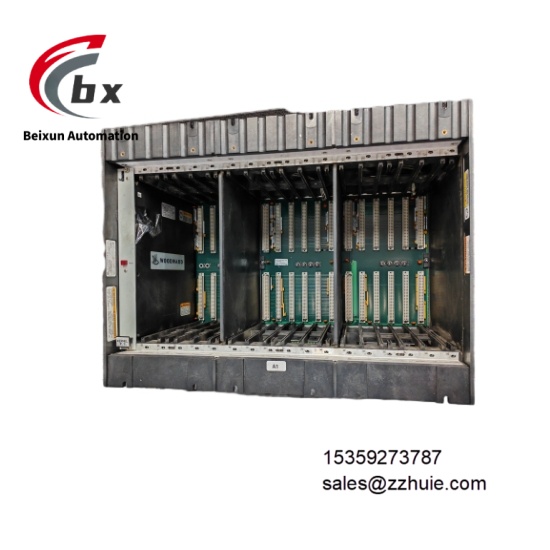
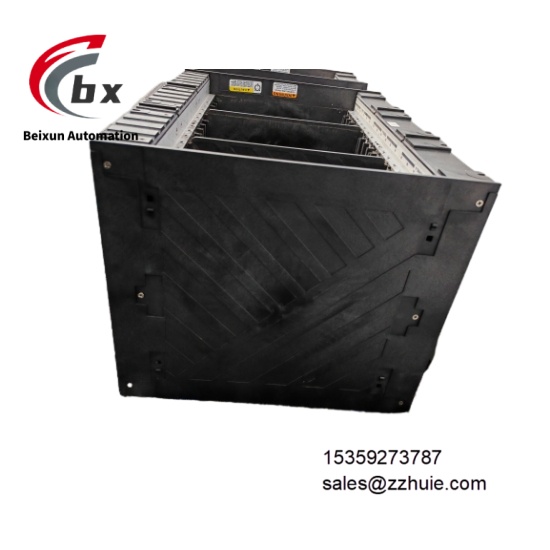
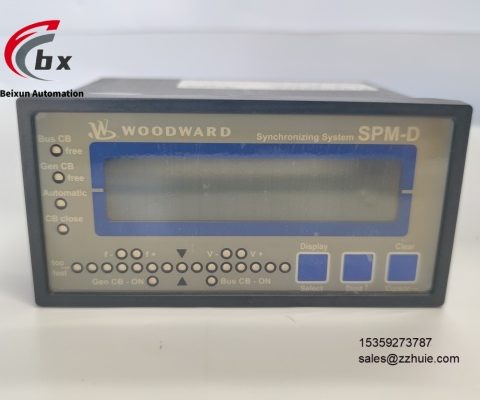
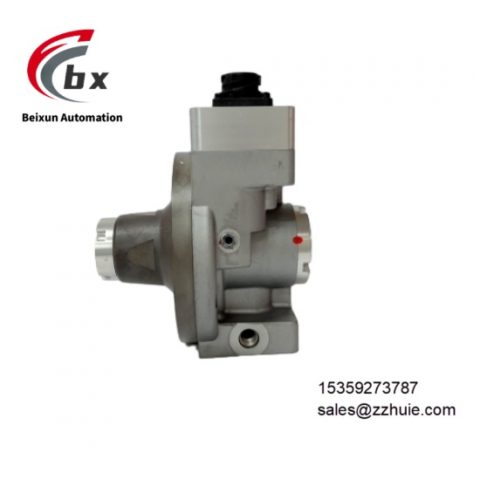
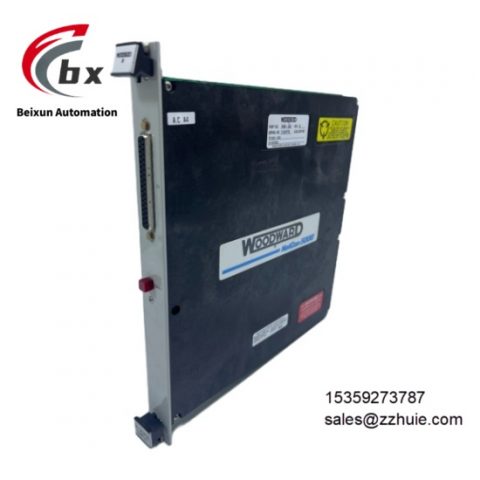
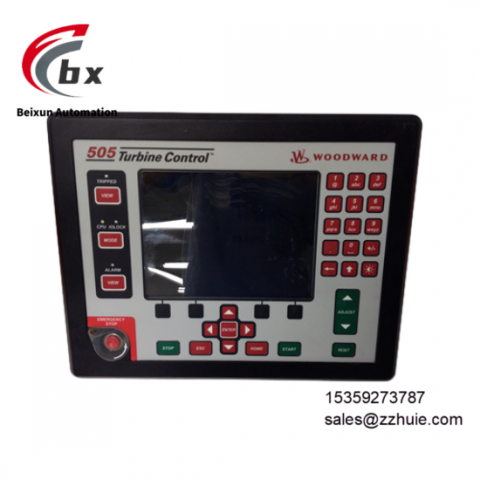
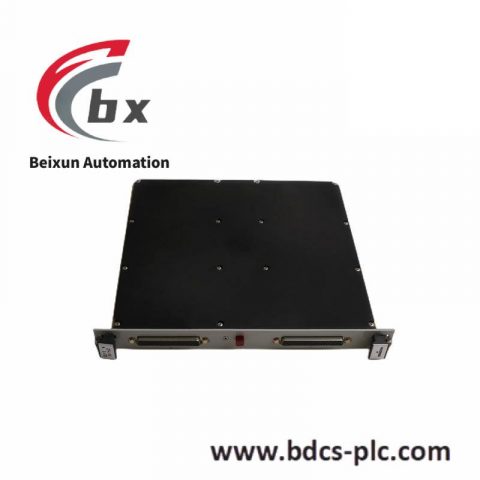
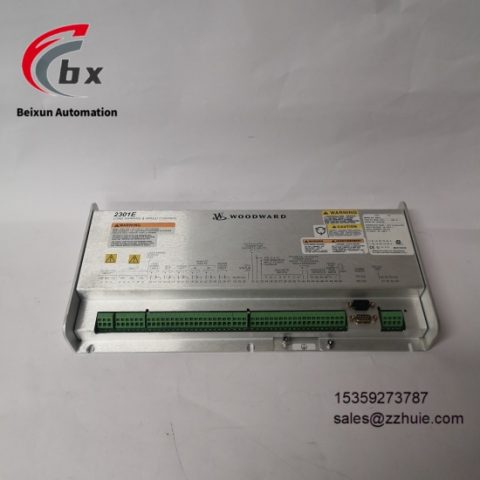
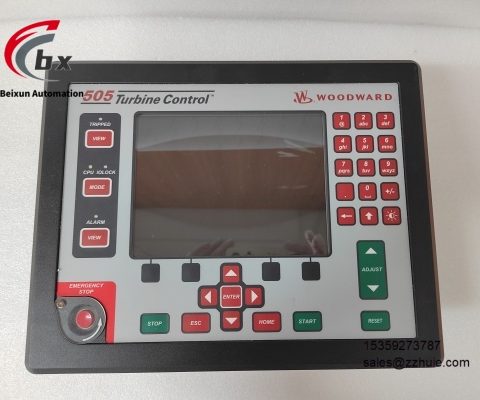
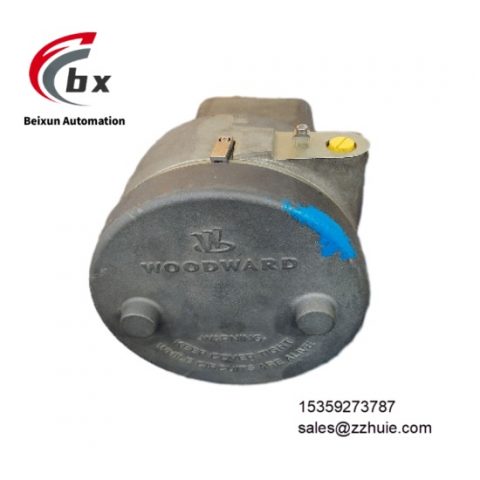
WOODWARD 5453-279 Electronic speed controller
Specific Parameters
Electrical Parameters
The power supply voltage is 12V DC/24V DC wide-voltage adaptation, with a voltage fluctuation tolerance of ±20%, typical power consumption of 10W, and maximum power consumption of 15W; the speed input supports dual-channel redundant collection, one magnetoelectric sensor (0.5-10kHz signal frequency) and one Hall-type sensor (5-20kHz signal frequency), with a speed measurement range of 50-6000rpm and a steady-state measurement accuracy of ±0.1%; there are 6 analog inputs in total, including 4 universal 0-5V DC/4-20mA inputs (adapting to temperature, oil pressure, gas pressure sensors) and 2 dedicated fuel pressure inputs (0-10V DC), with an input impedance of ≥10kΩ and a measurement accuracy of ±0.2%; the output signals include 2 PWM actuator drive outputs (frequency 100-500Hz, duty cycle 0-100% adjustable, controlling diesel and gas actuators respectively) and 3 SPDT relay outputs (250V AC/30V DC, 5A, for fault shutdown, fuel switching, and alarm); the communication interfaces support 1 RS-485 (Modbus RTU protocol, 1200-115200bps adjustable) and 1 Profinet IRT port (10/100Mbps auto-negotiation); the protection functions include overspeed protection (shutdown within 100ms when speed ≥115% rated value), low oil pressure protection (early warning when oil pressure ≤0.4bar, shutdown when ≤0.2bar), high water temperature protection (shutdown when water temperature ≥98℃), and fuel switching fault protection (alarm when switching timeout is 500ms).
Mechanical Parameters
The overall dimensions are 150mm (L) × 110mm (W) × 45mm (H); the housing is made of flame-retardant reinforced nylon (UL94 V-0 grade) with anti-static coating on the surface, the front panel has an IP65 protection rating, and the back terminal has an IP20 protection rating; the weight is approximately 0.7kg; the mounting method supports panel-embedded installation (adapting to 140mm×100mm opening) or 35mm DIN rail mounting (with adapter bracket required); the status indication includes 5 LED indicators: green for normal power, yellow for operation/fuel mode (steady on for diesel mode, blinking for dual-fuel mode), red for fault alarm, blue for normal communication, and white for sensor redundancy status.
Environmental Parameters
The operating temperature range is -40℃ to +70℃ (non-condensing environment), compliant with IEC 60068-2-1/2 standard; the storage temperature range is -40℃ to +85℃; the relative humidity is 5% to 95% (non-condensing), compliant with IEC 60068-2-3 standard; the EMC compliance meets EN 55022 Class A (emission limits) and EN 55024 (immunity) standards, with common-mode interference immunity ≥130dB; the vibration resistance is 10-500Hz frequency range, 1.5g acceleration (sine wave), with 30 minutes of continuous testing per axis; the impact resistance is 100g acceleration, 1ms pulse width (half-sine wave), meeting the vibration and impact requirements of marine and on-board scenarios.
Product Performance
The speed control accuracy is excellent, with a steady-state speed deviation of ≤±0.1% rated speed, and a speed recovery time of ≤300ms when the load changes suddenly (±30% rated load), which can meet the strict frequency stability requirements of dual-fuel generator sets (such as frequency deviation ≤±0.5Hz for data center backup power).
The dual-fuel coordinated control capability is strong, supporting dynamic adjustment of diesel-gas ratio (gas substitution rate 0-80% adjustable), with a fuel switching response time of ≤200ms and a speed fluctuation of ≤±1% during switching, avoiding power interruption or sudden speed change caused by fuel switching.
The redundancy reliability is high, with dual speed sensors, dual communication interfaces, and dual monitoring of key parameters (such as dual-point oil pressure collection) design; a single-point fault does not affect system operation, and the mean time between failures (MTBF) is ≥200,000 hours.
Diagnosis and maintenance are convenient, with built-in 64 fault logs (including fault type, occurrence time, and parameter snapshot), supporting remote reading of fault data and calibration parameters via Profinet without on-site disassembly, improving maintenance efficiency by 80%.
The environmental adaptability is extremely strong; IP65 protection can resist dust and low-pressure spray (such as ship decks, oilfield outdoor scenarios); there is no delay in low-temperature startup at -40℃, and the performance attenuation is ≤5% when operating at high temperature of 70℃, adapting to extreme climates and harsh working conditions.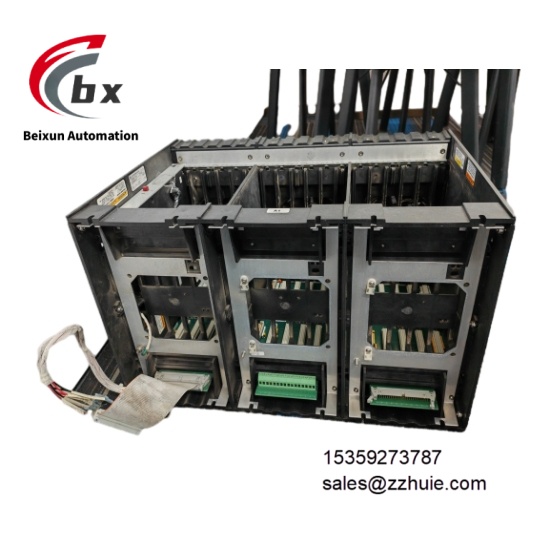


There are no reviews yet.