



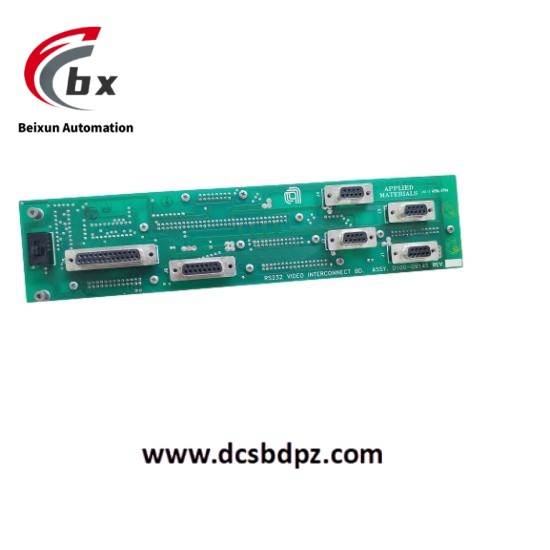
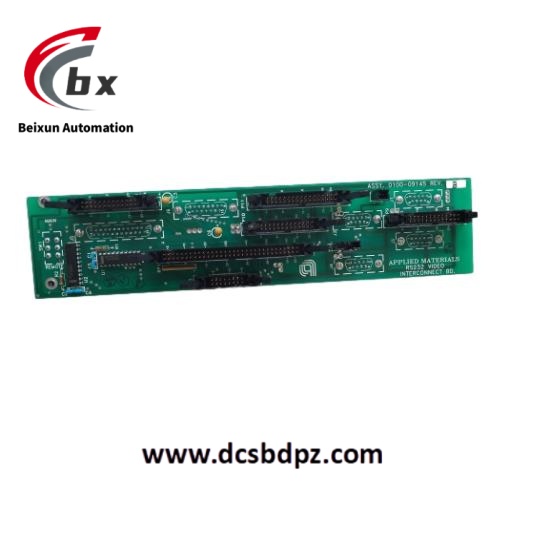
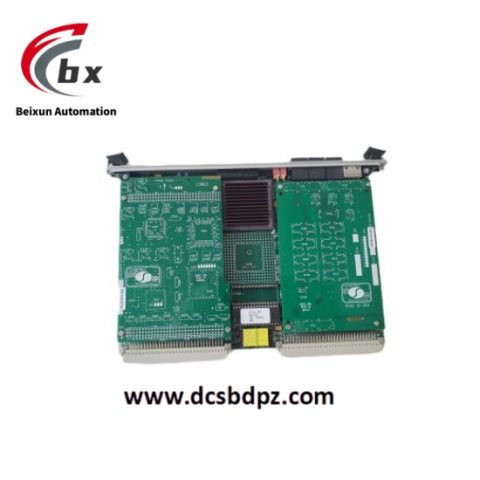
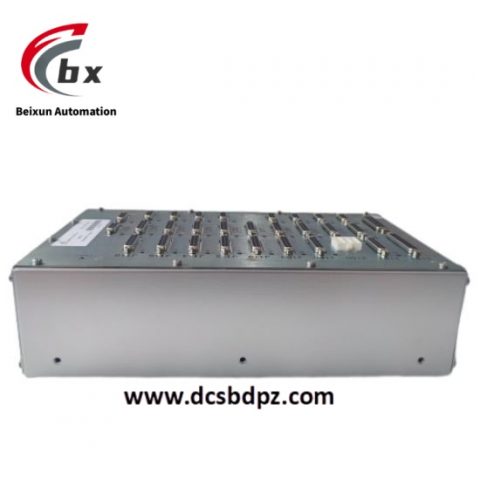
AMAT 0100-09145 High precision DC power module
Enter specifications
-Voltage: 380-480V AC (three-phase five wire system)
-Frequency: 50/60Hz
-Power factor: ≥ 0.99 (active PFC)
Output capability
-Voltage range: 0-1500V DC (adjustable)
-Current: 0-500A (continuous)/800A (peak, continuous for 10ms)
Efficiency ≥ 96% (typical load)
Dynamic response: When the load step changes, the output voltage recovery time is less than 50 μ s, and the overshoot is less than 1%
Control interface
-RS485 (Modbus RTU protocol)
-Analog input (0-10V/4-20mA)
-Digital I/O (8 inputs/8 outputs)
Protection mechanism: Overvoltage (OVP), Overcurrent (OCP), Overheating (OTP), Short Circuit Protection (SCP)
Environmental adaptability
-Working temperature: -20 ° C to+70 ° C (wide temperature design)
-Humidity: 5% -95% RH (without condensation)
Mechanical specifications
Dimensions: 482mm (width) x 177mm (height) x 400mm (depth);
Weight: Approximately 25kg (including heat sink)
Product Performance: Dual Breakthrough of Precise Control and Reliability
Ultra wide dynamic adjustment range
By using digital control algorithms, voltage accuracy of ± 0.1% and current accuracy of ± 0.2% can be achieved within the load range of 0-100%. For example, in the 3D NAND etching process, the module can adjust the output voltage in real-time based on the chamber plasma density to ensure that the etching rate fluctuation is less than ± 1.5%.
Multi scenario compatibility capability
Three modes of constant voltage (CV), constant current (CC), and constant power (CP) can be switched through software configuration to meet different device requirements. For example, in ALD (Atomic Layer Deposition) process, switching to constant current mode can accurately control the deposition rate of metal precursors and achieve single atomic layer accuracy.
Electromagnetic compatibility (EMC) optimization
Adopting multi-stage LC filtering and shielding design, both conducted interference (CE) and radiated interference (RE) are lower than CISPR 32 Class A standard. Actual test data shows that within a distance of 10m, the RF leakage intensity is below -40dB μ V/m, meeting the strict requirements of clean room environment for electromagnetic noise.
Long life cycle design
Key components such as IGBT modules and electrolytic capacitors are selected at industrial grade, with an average time between failures (MTBF) exceeding 100000 hours. Through redundant design (such as dual power input), system level N+1 backup can be achieved to ensure production line continuity.
Application field: Energy artery of semiconductor manufacturing
(1) Etching equipment power management
Function: Provides stable DC input for RF power supplies (such as ENI MPT series) and supports high-frequency plasma excitation (13.56MHz/27.12MHz).
Technical details: Through Modbus interface and device control system linkage, power dynamic adjustment is achieved (such as instantaneous switching from 500W to 5kW), supporting high aspect ratio etching of FinFET fin structure.
(2) Power supply for thin film deposition process
Function: Provide low ripple DC power supply for magnetron sputtering (PVD) target materials, ensuring the uniformity of metal thin films (thickness deviation<± 2%).
Case: In the copper interconnect process of the AMAT Endura platform, this module collaborates with a real-time thickness monitoring system (such as KLA Tencor P7) to achieve atomic level thin film deposition control.
(3) Wafer heating and temperature control
Function: Provide precise DC power supply for the heating table (Chuck) and support precise control of wafer temperature (± 0.5 ° C).
Integrated solution: Connect a temperature controller (such as Eurotherm 3204) through an analog interface to achieve timing synchronization of precursor adsorption and reaction in ALD process.
(4) Advanced packaging and testing
Function: In the Hybrid Bonding process, it provides high stability power supply for ultrasonic welding equipment and supports nanoscale bonding gap control.
Data value: Through the built-in data recording function, the voltage and current curves during the welding process can be traced for process yield analysis.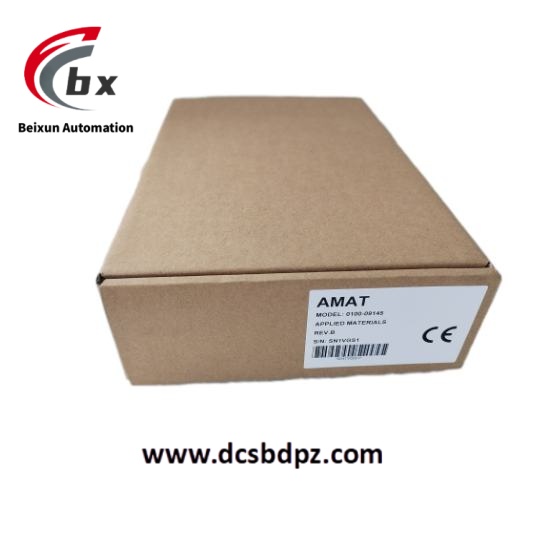


There are no reviews yet.