



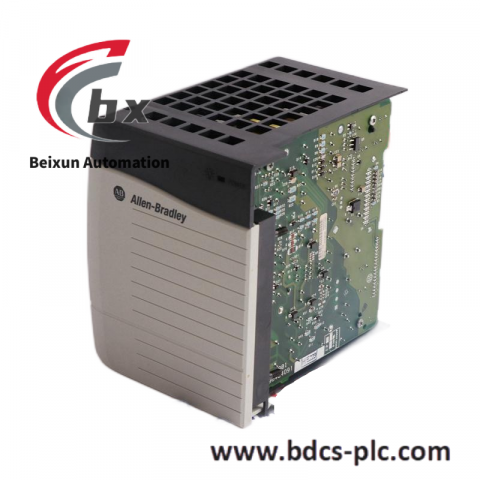
Allen-Bradley 1756-IF16 Analog Input Module
Core parameters
Input Type
-Voltage signal: ± 10V, 0-10V, 0-5V
-Current signal: 0-20mA, 4-20mA
-Supporting signal types: thermocouple, RTD (requires external signal conditioning)
Channel Configuration
-Single ended wiring: 16 channels
-Differential wiring: 8 channels
-High speed differential wiring: 4-channel (scanning time shortened to 5-122ms)
resolution
-Voltage input: 16 bits (160 μ V/count from 0 to 10.25V)
-Current input: 16 bits (0.32 μ A/count for 0-20.5mA)
accuracy
-Voltage: ≤ 0.05% full range (25 ℃)
-Current: ≤ 0.15% of full scale (25 ℃)
Scan time
-Single end: 16-488ms
-Differential: 8-244ms
-High speed differential: 5-122ms
Power requirements
-Backboard power supply: 5V DC (150mA), 24V DC (40/65mA)
input protection
-Overvoltage protection: 30V DC (voltage input), 8V DC (current input)
communication protocol
Backplane communication: ControlLogix backplane protocol, supporting real-time data exchange with PLC or controller
Physical specifications
-Dimensions: 101.6mm (height) × 127mm (width) × 76.2mm (depth)
-Weight: Approximately 0.68kg
Environmental parameters
-Working temperature: 0 ° C to 60 ° C (some sources mention that the extended temperature type can reach -25 ° C to 70 ° C)
-Protection level: IP20 (to be installed inside the control cabinet)
authentication
-Industrial certification: CE, UL, CSA (some models support ATEX explosion-proof certification, specific version needs to be confirmed)
Product advantages
High precision and high resolution
The 16 bit ADC conversion technology ensures accurate measurement of weak signals such as temperature and pressure, meeting the stringent precision requirements of industrial process control. For example, within the range of 0-10.25V, the resolution can reach 160 μ V/count, making it suitable for high-sensitivity acquisition of sensor signals.
Flexible signal configuration
Supports three wiring modes: single ended, differential, and high-speed differential. The differential mode with stronger anti-interference ability or the high-speed differential mode that meets fast response requirements can be selected according to the on-site environment. For example, differential wiring can effectively suppress common mode noise and is suitable for industrial environments with strong electromagnetic interference.
Modular design and compatibility
Seamlessly integrated with the ControlLogix system, multiple modules can be expanded through the backplane, supporting mixed I/O configurations such as digital input/output and motion control modules. The module is compatible with Rockwell’s Studio 5000 programming software and supports multilingual programming such as ladder diagram (LD) and structured text (ST).
Industrial grade reliability
Built in overvoltage protection and diagnostic functions (such as wire breakage detection and channel status monitoring) can monitor the health status of the module in real time and issue alarms, reducing downtime. Industrial grade design ensures stable operation within a wide temperature range of -25 ° C to 70 ° C, suitable for harsh industrial environments.
Efficient data processing
Support Sigma Delta analog-to-digital conversion technology, which can reduce signal noise and improve dynamic response speed. The data storage format supports integer mode and IEEE 32-bit floating-point format, making it easy to interact directly with the controller.
application area
Industrial automation production line
Process monitoring: Collect analog signals such as temperature, pressure, and flow rate for real-time adjustment of production parameters (such as temperature control of chemical reaction vessels).
Equipment status monitoring: By using vibration sensors or strain gauges to monitor the operating status of mechanical equipment (such as motors and pumps), predictive maintenance can be achieved.
Energy and Power Systems
Power monitoring: monitoring parameters such as grid voltage, current, power factor, etc., optimizing energy allocation and grid stability.
Renewable energy: In wind and photovoltaic systems, collecting inverter output signals and environmental parameters (such as wind speed and light intensity) to achieve power regulation and fault diagnosis.
oil and gas
Pipeline transportation: Monitor pipeline pressure, flow rate, and temperature, and improve anti-interference ability by combining differential wiring to ensure the accuracy of long-distance data transmission.
Refinery: Collect analog signals in distillation towers and reactors to achieve closed-loop control of process parameters.
Building Automation
Environmental control: By collecting data through temperature and humidity sensors and CO ₂ sensors, the air conditioning and lighting systems are automatically adjusted to achieve energy-saving management.
Security system: integrated with smoke sensors and pressure sensors, real-time monitoring of building safety status.
Automotive Manufacturing and Robotics
Welding and painting: Collect signals such as welding current and spraying pressure, optimize process parameters to improve product quality.
Robot control: Cooperate with servo motor drivers to achieve high-precision motion control (such as position feedback of robotic arms).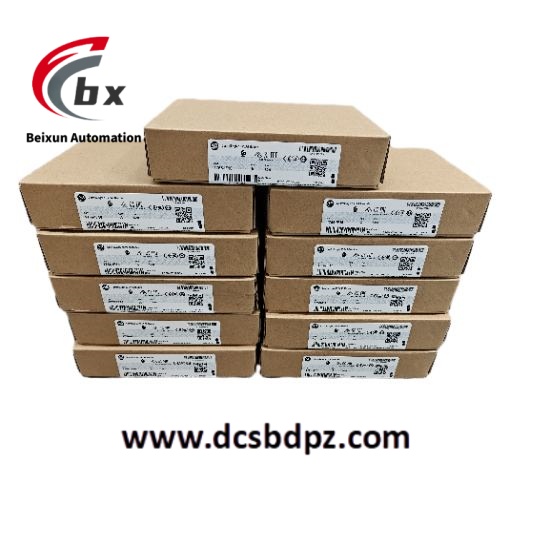


There are no reviews yet.